Top-rated independent appliance repair on Oahu & the Islands
Stove & Range Repair — Book a Visit Today
Stoves live in the steamiest corner of an island kitchen. Salt air creeps in through the window, humidity settles into wiring, and burner parts corrode faster here than on the mainland. Common failures: a gas burner that clicks but won't light, an electric coil that stays cold, a glass top element stuck on high, an oven that reads 350 but bakes like 275. Some ranges throw an error code and quit outright. A visit starts with questions about what you saw and smelled, then testing igniters, switches, sensors, and the control board. We explain what failed in plain words, and if a part has to ship in, we tell you that up front. Call us and talk it through with us.
Call (888) 857-9883- Real people on the phone
- 7 days a week
- Quote in writing before any work
Taking calls until 5:00 PM HST
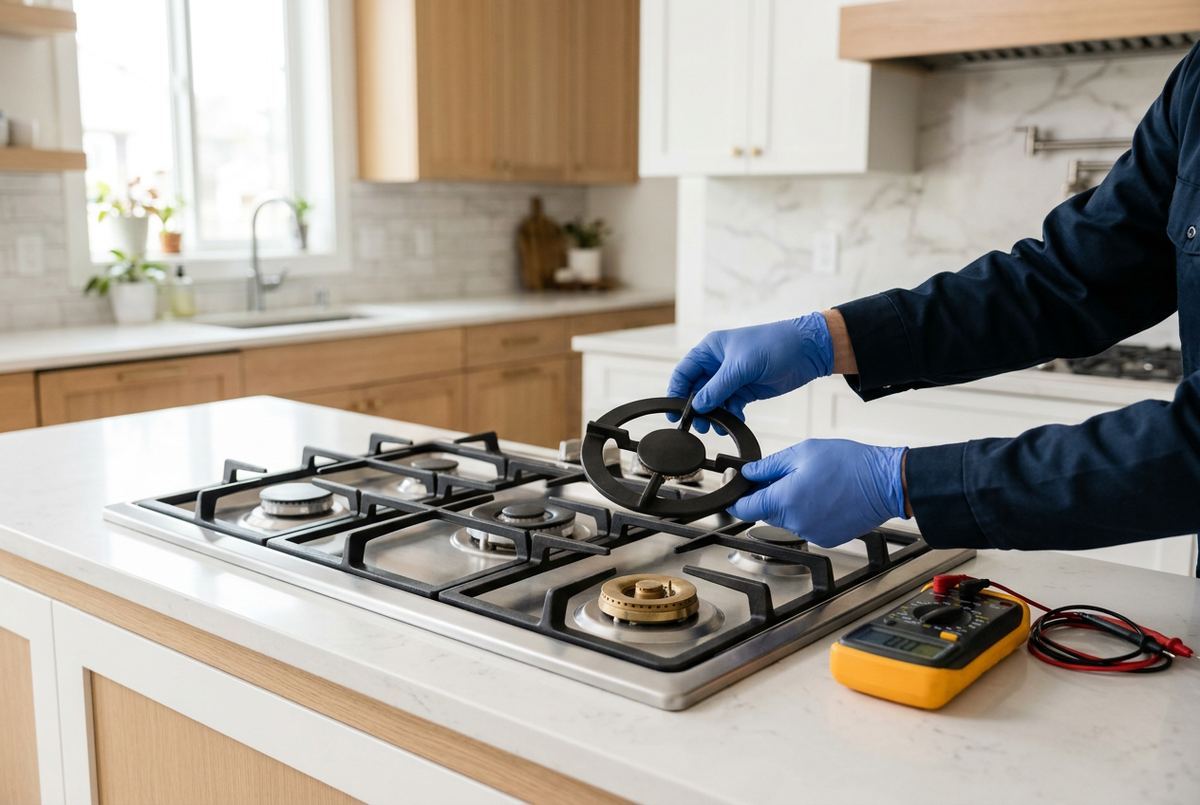
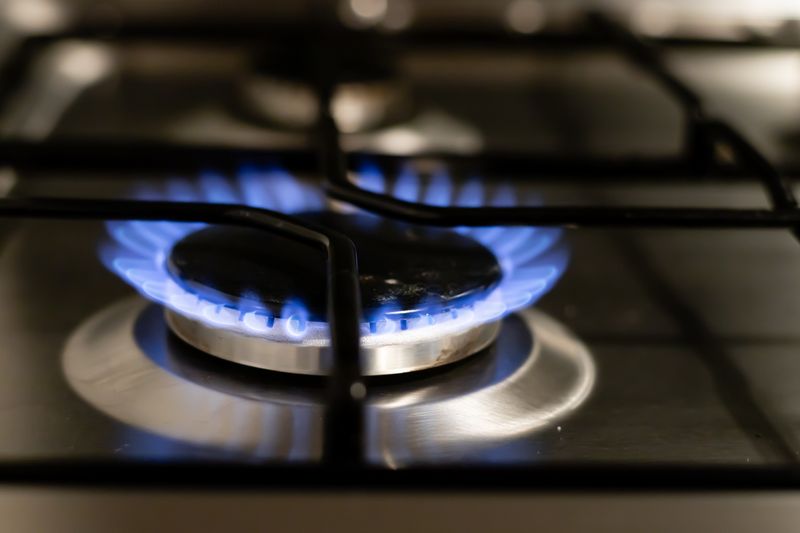
The stove & range symptoms we hear most
- It clicks and clicks but never lights Spark igniter, clogged burner port, or a damp switch
- One burner is dead, the rest are fine Failed surface element, burner receptacle, or infinite switch
- My oven burns cookies on the bottom every time Drifting temperature sensor or a weak bake element
- Smells like gas when nobody is cooking Valve, regulator, or connection issue — shut off and call
- Glass top burner won't turn down from high Stuck infinite switch or shorted control relay
Safe things to check first
Worth a look before you call — sometimes it saves you the visit.
- 1 Make sure the range is fully plugged in and the breaker hasn't tripped, since a half-seated cord causes odd part-dead behavior.
- 2 Lift the burner caps and look for spilled food or crusted salt blocking the little gas ports.
- 3 Check that the oven isn't sitting in a delay-start, Sabbath, or lock mode left over from cleaning.
- 4 If you smell gas, shut the supply valve, open windows, skip the light switch, and step outside before calling.
What homeowners get from an independent shop
| Tunista Appliance Repair | Big-box repair chains | Handyman listings | |
|---|---|---|---|
| Quote in writing before a wrench comes out | ✓ | ✕ | ✕ |
| Live answer seven days a week | ✓ | ✕ | ✓ |
| All major brands, gas and electric | ✓ | ✓ | ✕ |
| No manufacturer targets to hit | ✓ | ✕ | ✓ |
| Local techs who know the housing stock | ✓ | ✕ | ✓ |
What homeowners say after the visit
“The quote explained what failed and why, in plain words. I actually understood my own dishwasher for once.”
Wade F.Aina Haina, HI“Freezer section thawed overnight. They triaged by phone, fit us in early, and saved most of the meat.”
Opal S.Captain Cook, HI“Third generation machine in our family and they treated it with respect instead of pushing something new.”
Ben H.Kamehameha Heights, HIStove & Range Repair — quick answers
Why do burners fail faster in Hawaii?
Salt-laden air and steady humidity corrode metal contacts, igniter wires, and terminal blocks. Coastal kitchens see pitted burner receptacles and rusted igniters years earlier than dry inland homes. Regular wipe-downs help, but corrosion is the usual reason an element quits here.
How long will a part take to arrive?
Common igniters, elements, and switches are often on hand. Control boards and model-specific parts usually ship from the mainland, which adds days. We tell you what we're waiting on and keep you posted rather than leaving you guessing.
Do you work on gas and electric ranges?
Both, plus glass-top induction and slide-in dual-fuel models. Gas work involves igniters, valves, and safety checks. Electric work centers on elements, switches, and boards. We handle all major brands as an independent shop, not a factory outlet.
Is a stove worth fixing or should I replace it?
Depends on the failure. A sensor, igniter, or element swap usually makes sense on a range with life left. If the frame is rusted through or several major parts have failed at once, we'll say so honestly.
My oven temperature is way off. Can that be fixed?
Often yes. A worn temperature sensor, a failing bake element, or a control board losing calibration all cause drift. We measure actual cavity temperature against the display, then repair or recalibrate depending on what the readings show.
Can I keep using a burner that clicks constantly?
Better not to. Continuous sparking usually means moisture or debris on the igniter, and gas may be releasing without lighting. Turn the knob off, air out the kitchen, and call us so we can look at the switch and igniter.
How it works
- Step 1
Tell us the sound
Call us or fill in the form and describe what you hear, smell, or see. Puddle under the washer? Clicking from the fridge? Small details help us load the right parts before we drive out.
- Step 2
We look it over
Our tech opens the machine and tests for the real cause instead of guessing. Salt-eaten terminals and humid control boards hide well. You hear exactly what failed and which repair options make sense.
- Step 3
Fixed or scheduled
Many repairs finish on the same visit with parts off the van. When something has to ship in from the mainland, we tell you straight, order it, and keep you posted until it lands.
- A real person answers
- Open 7 days
- Written quote before work starts
Why homeowners call us
- Built for salt airCoastal homes chew through appliances. We check for corroded connectors, rusted brackets, and moisture sitting in control boards, because fixing the symptom means little if salt keeps eating the same part next season.
- Humidity knows-howDamp trade wind air makes dryers work harder and vents clog faster. We clear the airflow path and test moisture sensors, then explain the small habits that keep your laundry room from fighting the weather.
- Straight talk on partsShipping across the Pacific takes time, and we say so up front instead of vanishing. You get realistic timing and a plan for the wait. If a machine isn't worth waiting for, we'll tell you that too.
- Independent and localWe are an independent repair company and we work on all major brands. No sales pitch for a new unit. Neighbors talking to neighbors, in plain words, about the machine sitting in your kitchen right now.
- All major brands, gas & electricWhirlpool, Samsung, LG, GE, Maytag, Bosch, KitchenAid and more, as an independent repair company.
- Straight answersWhen a repair doesn't make sense, we tell you, sometimes before we even roll a truck.
Stove & Range Repair
Small faults become big ones on a schedule of their own
Describe the symptoms and we'll book the visit — takes about a minute.
- A real person answers
- Open 7 days
- Written quotes
- All major brands
- Gas & electric
Rather not call? Get a free quote →